
A professional driving instructor is a trained educator who teaches learner drivers how to operate a vehicle safely, follow road transport laws, and pass their licensing tests. Beyond explaining basic mechanical controls, an instructor diagnoses driving errors in real time, manages on-road risk using dual-control pedals, and instils lifelong defensive driving habits. Structured lessons transform informal practice into progressive, milestone-based skill development.
What is the primary role of a driving instructor?
The primary responsibility of an instructor is to develop a learner's vehicle control, spatial awareness, and road safety compliance under real traffic conditions. While friends or family members can supervise log book hours, professional instructors provide systematic pedagogical training using specialised safety equipment to build competent driving habits from the ground up.
Dual-control pedals fitted to training vehicles provide an essential physical safeguard, featuring a secondary brake and often a secondary accelerator on the passenger side. This mechanism allows the passenger-side professional to intervene immediately if a learner fails to yield, misjudges approaching traffic, or freezes at a busy intersection. Having that mechanical override creates a secure space where learners can tackle complex traffic environments without unnecessary danger.
Foundational training focuses on three distinct operational pillars:
- Vehicle operational control: Managing smooth accelerator application, progressive braking, clutch bite points in manual transmissions, and steady steering input.
- Road positioning: Maintaining consistent lane discipline, setting appropriate following distances, and selecting safe lateral buffers around parked cars and cyclists.
- Hazard perception: Scanning intersections systematically, anticipating pedestrian movements, and reading road conditions well before a hazard demands emergency intervention.
Beyond basic mechanics: Teaching defensive driving habits
Passing a practical driving exam requires basic vehicle handling, but surviving on busy public roads requires defensive driving skills. Professional guidance trains your eyes to look several vehicles ahead rather than fixating on the road immediately in front of the bonnet.
Visual routines taught during professional lessons help you identify blind situations, such as approaching a crest where oncoming traffic is obscured or passing stationary buses where pedestrians might step out unexpectedly. Building early observational habits prevents sudden overreactions, establishing habits beyond the NSW road test that protect you across a lifetime of solo driving.
How professional driving lessons work step by step
Systematic driving lessons follow a structured progression tailored to each student's current confidence and handling skill. Rather than driving aimlessly through random streets, every session focuses on clear, targeted learning outcomes.
- Cockpit drills and vehicle setup: Every initial lesson begins before the engine starts. Students learn correct seating posture, steering wheel grip, hand controls, and precise side and rearview mirror adjustment to minimise blind spots.
- Low-speed vehicle handling: Sessions move to quiet, low-traffic residential streets to practise smooth take-offs, gentle braking, left and right turns, and kerb positioning.
- Traffic integration: Once basic control becomes consistent, training introduces higher-speed zones, multi-lane roads, traffic-light intersections, and single- and multi-lane roundabouts.
- Maneuver mastery: As spatial awareness solidifies, lessons incorporate complex maneuvers required during official driving assessments, such as parallel parking, kerbside angle parking, and three-point turns.
Structuring sessions for nervous or first-time beginner drivers
Anxiety affects many first-time learners when facing busy roads. Experienced educators reduce driving stress by breaking complex driving tasks into manageable, repeatable micro-skills.
Early sessions start in quiet backstreets or low-density industrial areas where traffic pressure is negligible. Clear, calm, advance instructions give students adequate time to prepare before approaching a turn or lane change. When an error occurs, the instructor guides the car smoothly to the kerb to discuss the scenario without panic. Knowing what to expect from a professional driving school removes uncertainty before you take the wheel.
Professional driving instructor vs. supervising driver: Key differences
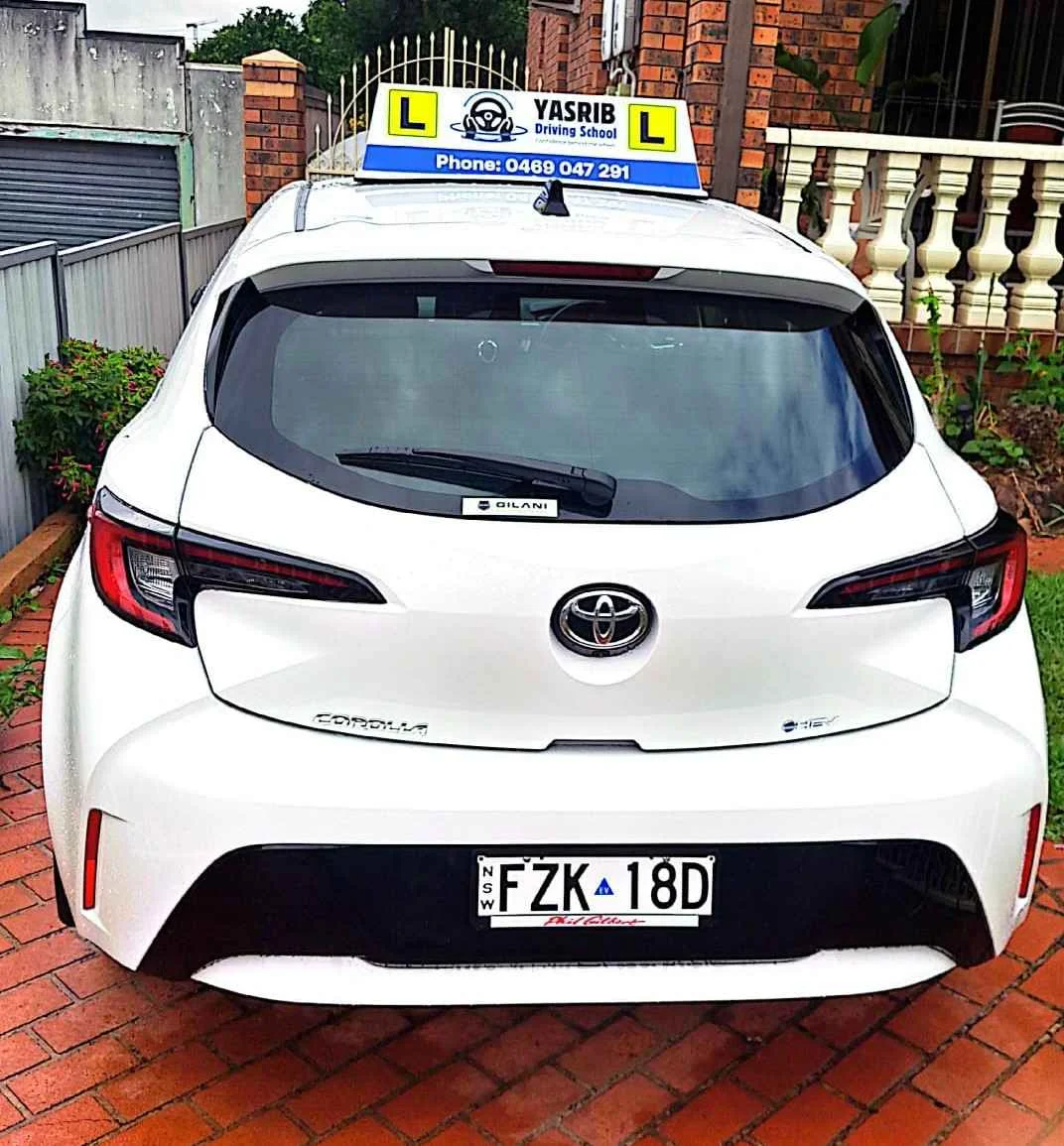
Many learner drivers rely primarily on parents, partners, or relatives to accumulate log book hours. While informal practice is vital for building overall mileage, structured coaching provides curriculum design and objective feedback that informal supervision rarely offers.
| Training Element | Professional Driving Instructor | Informal Supervising Driver |
|---|---|---|
| Safety Equipment | Dual-control pedals for immediate mechanical intervention | Standard passenger seat with no mechanical override |
| Curriculum | Systematic, milestone-based learning syllabus | Casual, route-dependent driving practice |
| Assessment Knowledge | Direct understanding of current licensing testing standards | Reliance on outdated road rules or personal driving habits |
| Feedback Style | Objective, corrective, and calm technical instruction | Often reactive, emotional, or inconsistent |
| Habit Formation | Enforces strict head-check, blind-spot, and mirror routines | May pass on personal shortcuts and steering oversights |
Well-meaning family members frequently transfer subtle driving errors to learners without realising it. Common examples include crossing arms improperly over the steering wheel, rolling through stop signs, omitting blind-spot head checks, or following the car ahead too closely. Professional educators identify and correct these bad habits before they solidify into muscle memory.
Formal post-lesson debriefs provide another distinct advantage. At the conclusion of each drive, the instructor reviews specific competencies achieved, highlights remaining gaps, and suggests targeted areas for the learner to practise during private family drives between formal sessions.
How much does it cost to hire a driving instructor?
Pricing for private driving instruction varies based on lesson duration, transmission type, and the depth of assessment preparation required. Investing in structured professional lessons often reduces total learning time because students learn correct vehicle control and observation habits right from the start.
Session formats typically include:
- 1-Hour Beginner Lessons: Starting from $59 per hour, these focused sessions target specific skills such as reverse parking, roundabout navigation, or basic vehicle dynamics.
- 1.5-Hour Extended Sessions: These longer blocks provide ample time to practise complex multi-lane routes, highway merges, and comprehensive mock driving assessments without feeling rushed.
- 6-Hour Packages: Multi-session bundles designed to cover the complete learning spectrum from fundamental cockpit setup through to advanced defensive driving routines.
Yasrib Driving School provides 1 hr beginners Lesson, 1.5 hr beginners Lesson, 6 hr beginners Lesson for Beginner drivers, learner drivers needing log book hours, and overseas licence holders converting to an Australian NSW licence in Merrylands, Parramatta, Lidcombe, Blacktown, and surrounding areas.
Single pay-as-you-go sessions suit drivers who only need targeted skill refinement, whereas multi-lesson packages offer better value for beginners who need steady coaching leading up to their practical driving exam.
Specialised training: Overseas licence conversions and test preparation
Professional driver training extends beyond teaching teenagers; a substantial portion of instruction involves experienced drivers adapting to Australian road environments. Converting an overseas licence to an Australian NSW driver licence requires unlearning foreign road conventions and mastering local road safety laws.
Core areas addressed during overseas licence conversion training include:
- Give-way and roundabout protocols: Clarifying right-of-way rules, lane positioning on multi-lane roundabouts, and proper exit indicator timing.
- Pedestrian priority and school zones: Understanding local speed limit enforcement, flashing school light timeframes, and pedestrian crossing rules.
- Mandatory observation checks: Passing the NSW practical driving test requires deliberate over-the-shoulder blind-spot checks before any lateral movement—a critical step frequently missed by experienced drivers from overseas.
Mock driving tests conducted under realistic assessment criteria allow students to experience testing conditions without verbal prompts. This simulation helps you identify minor errors and test readiness under genuine exam pressure before booking practical driving test appointments in NSW.
Multilingual instruction further ensures that technical road rules and vehicle control terms are understood completely. Instructors who speak English, Hindi, Urdu, and Punjabi can explain subtle legal and mechanical concepts clearly, removing language barriers and building confidence behind the wheel.
Frequently Asked Questions
Can I hire someone to teach me to drive if I have zero experience?
Yes. Professional driving instructors routinely teach absolute beginners who have never sat behind a steering wheel. Initial lessons take place in quiet, low-traffic areas using dual-control vehicles, allowing the instructor to manage braking while you learn the basic mechanics of starting, stopping, and steering.
What should I bring to my first lesson with a driving instructor?
You must bring your physical or digital learner driver licence and your official log book or digital log book app. Wear comfortable clothing and flat, closed-toe shoes with thin soles so you can feel pedal resistance accurately. Bring any required prescription glasses or contact lenses noted on your licence conditions.
How do I know if a driving instructor is properly licensed?
Qualified driving instructors in Australia must hold a valid Driving Instructor Licence issued by the relevant state transport authority, such as Transport for NSW. This accreditation requires background checks, medical clearances, and formal testing. Instructors display their official instructor badge or certificate inside their vehicle.
Can a driving instructor accompany me during the practical driving test?
Yes. Learners frequently hire their instructor's dual-control vehicle for the official practical driving test. An instructor typically conducts a warm-up drive prior to the appointment, assists with check-in at the testing centre, and waits while the transport testing officer conducts the driving assessment.


