
Passing the practical driving test proves that you meet minimum regulatory standards on a specific test route, but driving safe for life requires building proactive risk-management routines that outlast your provisional plates. True road safety is not about memorising test manoeuvres; it is about consistently anticipating hazards, managing space around your vehicle, and maintaining physical observation habits under pressure. Adopting these defensive behaviours early creates subconscious driving instincts that protect you and your passengers for decades.
What Does Driving Safe for Life Actually Mean?
There is a fundamental difference between training to pass an assessment and developing the skills needed for long-term safety. Many learner drivers focus entirely on rote memorisation—practising specific kerbside stops, three-point turns, and known testing circuits until they can execute them on demand. While this preparation helps when you learn how to book practical driving test appointments and sit your evaluation, it only measures baseline competence on clear, predictable roads.
Mechanical car control—steering smoothness, progressive braking, and gear selection—is merely the mechanical baseline of driving. Real-world survival depends on hazard perception. A technically skilled driver who controls the vehicle smoothly can still cause a collision if they fail to recognise subtle changes in road conditions, such as a pedestrian hesitating at a zebra crossing or a delivery van blocking a sightline.
The driving habits formed during your first fifty hours behind the wheel solidify into long-term muscle memory. If you train yourself to check mirrors instinctively, scan side streets before entering an intersection, and leave adequate following distances, those actions become automatic. When sudden hazards appear, your subconscious reaction will be controlled and protective rather than panicked.
Core Defensive Habits That Protect You on Every Trip
Defensive driving means controlling your environment rather than reacting to surprises. This begins with maintaining a variable space cushion around your vehicle. In quiet residential streets, a safe gap allows you to react to opening car doors or reversing driveways. On dense multilane arterials such as Parramatta Road or the Great Western Highway, maintaining adequate space requires adjusting your speed to account for sudden braking in adjacent lanes, heavy vehicles with limited braking power, and merging traffic.
A disciplined observation routine keeps your space cushion intact. This involves a continuous cycle:
- Scanning the road ahead toward the horizon to spot slowing traffic, lane closures, or construction zones early.
- Checking your rear-view mirror every few seconds and always before braking or changing speed.
- Performing physical head checks over your shoulder across your blind spots before any steering input, lane change, or merge.
When stopping in traffic queues, stop far enough behind the car in front so that you can see its rear tyres touching the road surface. This distance gives you an immediate escape path to steer around the vehicle if it stalls or if you notice a car behind you failing to brake in time. Similarly, when waiting to turn across oncoming traffic, keep your wheels pointing straight until you begin the turn so that a rear-end impact will not push you into incoming lanes.
Observation Routine Sequence:
1. Scan road horizon (12+ seconds ahead)
2. Check rear-view and side mirrors
3. Identify potential road obstacles & escape paths
4. Perform shoulder blind-spot check before moving
Anticipating Road Hazards Before They Materialise
Anticipation separates an average driver from one who practices driving safe for life. Instead of waiting for a hazard to develop, look for the clues that precede it. A ball rolling into a suburban street often precedes a running child. Exhaust fumes from a parked car indicate it may pull out into traffic. Brake lights flickering three cars ahead signal slowing traffic before the driver immediately in front of you reacts. By reading these micro-cues, you can adjust your foot to hover over the brake pedal, eliminating reaction lag and keeping your vehicle stable.
| Traffic Situation | Common Driver Reaction | Proactive Defensive Driver Action |
|---|---|---|
| Parked delivery truck blocking lane view | Swerving around quickly at normal speed | Slowing down, covering the brake, and checking for pedestrians stepping out |
| Approaching green traffic light at blind intersection | Accelerating through without scanning | Easing off accelerator, scanning left and right for late red-light runners |
| Tailgater following closely behind | Tapping brakes aggressively or accelerating | Increasing following distance to the vehicle ahead to create a buffer |
| Heavy rain begins on highway | Maintaining posted speed limit | Dropping speed, doubling following distance, and switching on headlights |
Transitioning from Learner Hours to Solo Driving
The transition from a learner licence to solo P1 driving represents a massive mental shift. In a dual-control training vehicle, a learner operates with the safety net of an experienced supervisor who can intervene with auxiliary pedals or verbal guidance. Driving alone removes that reassurance entirely, placing complete accountability for speed selection, gap assessment, and route navigation on the novice driver.
To build true independence, learner log book hours must not be spent repeating the same simple suburban loops. Log book practice should expose you to varied, demanding driving environments:
- High-density commercial strips: Teaches scanning for jaywalkers, delivery vans, and sudden stops.
- Multi-lane roundabouts: Builds confidence in lane selection, early signalling, and right-of-way judgment.
- High-speed motorways: Develops smooth merging techniques, blind-spot monitoring, and high-speed gap management.
- Adverse weather conditions: Demonstrates how wet road surfaces reduce tyre grip and increase stopping distances.
- Night routes and unlit corridors: Sharpens reliance on headlight spread, reflective road markers, and peripheral vision.
Experiencing these conditions under supervision builds the confidence needed to handle challenging situations alone without panic.
Where Long-Term Driving Habits Begin to Deteriorate
Complacency is one of the most common threats to driving safety. Once a driver passes their test and gains unsupervised experience, strict test-day disciplines often slip. Drivers begin glancing at dashboard screens, resting one hand casually on the steering wheel, cutting corners on right turns, or treating stop signs as rolling yields. Over time, these minor lapses compound into dangerous habits that increase collision risks.
Modern vehicle safety technology can also encourage driver complacency. Features like blind-spot warning lights, lane-keep assist, and reversing cameras are designed as secondary aids, not primary controls. Relying entirely on a reversing camera without turning your head ignores cross-traffic, cyclists, and pedestrians moving outside the camera's fixed lens angle. Knowing what to expect from a professional driving school includes learning how to use vehicle technology to assist—rather than replace—your physical scanning checks.
Adapting Established Driving Habits for Overseas Licence Holders
Experienced overseas drivers converting to a local licence often face unique challenges. Driving experience gained abroad does not always translate directly to Australian road systems. NSW roads feature strict giveaway rules at roundabouts, specific school zone speed enforcement, dedicated bus and transit lanes, and strict turning protocols at signalised intersections.
Habits developed in left-hand drive vehicles—such as mirror checking sequences and road positioning—require deliberate retraining. Correcting these ingrained habits early ensures full compliance with local road laws and prevents dangerous errors in complex urban traffic networks.
How Structured Driver Training Instils Lifelong Safety
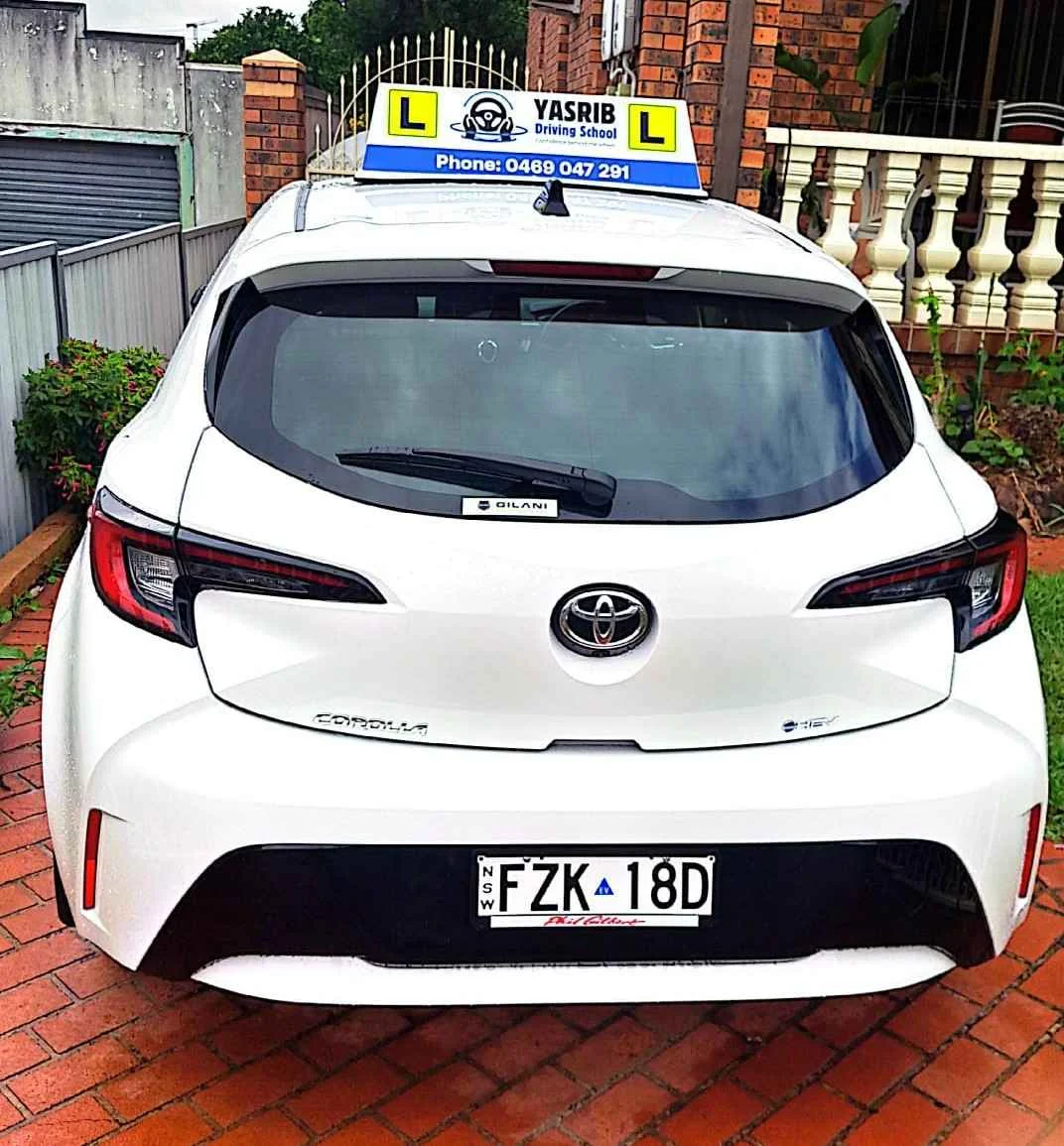
Professional driver training focuses on identifying and correcting subtle micro-errors before they become permanent habits. An experienced instructor catches late indicator signals, improper steering hand positions, and rushed gap selections that family supervisors might miss. Correcting these technical details builds a solid foundation for lifelong driving safety.
Clear communication plays a vital role in building road confidence. Understanding the practical mechanics behind right-of-way rules, complex signal phases, and multi-lane positioning requires precise explanations tailored to the student's learning style and language background. When road concepts are thoroughly understood rather than merely memorised, drivers apply them accurately under pressure.
Yasrib Driving School provides 1 hr beginners Lesson, 1.5 hr beginners Lesson, 6 hr beginners Lesson for Beginner drivers, learner drivers needing log book hours, and overseas licence holders converting to an Australian NSW licence in Merrylands, Parramatta, Lidcombe, Blacktown, and surrounding areas.
Mastering complex environments—such as high-traffic intersections, merge lanes, and dense urban corridors—gives drivers the resilience to navigate any route safely. Committing to driving safe for life transforms driving from a stressful task into a calm, controlled, and safe routine on every journey you take.
Frequently Asked Questions
What is the difference between passing the driving test and driving safe for life?
Passing a practical driving test proves baseline compliance with road rules on a predetermined test route. Driving safely for life involves continuous risk assessment, active space management, and defensive habits that protect you across unpredictable road and weather conditions long after your test is completed.
How do professional lessons help build long-term driving safety?
Professional instructors provide structured feedback that targets bad habits before they solidify into muscle memory. They teach systematic observation routines, hazard anticipation, and vehicle positioning techniques that casual supervising drivers frequently overlook.
Why do experienced overseas drivers need safe driving guidance in NSW?
Road rules, intersection layouts, and priority systems vary significantly between countries. Professional guidance helps overseas licence holders adapt to local roundabout protocols, pedestrian priority rules, and specific lane markings, ensuring safe and compliant driving on Australian roads.


