
To book practical driving test appointments in NSW, you must schedule through your Service NSW account online or visit a Service NSW centre in person after completing your mandatory learner requirements. Eligible drivers must have passed the Hazard Perception Test (HPT) and logged their required driving hours before selecting an assessment slot. Once confirmed, you will receive a booking reference that secures your allocated date, testing location, and testing time.
Prerequisites to Clear Before You Book Practical Driving Test Dates
Securing a test date without verifying your baseline eligibility often leads to cancelled bookings and lost fees. Service NSW enforces strict prerequisite gates before a learner driver can sit behind the wheel with a testing officer. Ensuring your documentation, digital logs, and testing records align properly prevents administrative roadblocks on test day.
Logbook Hours and HPT Requirements
If you hold a NSW learner licence and are under the age threshold set by Transport for NSW, you must record all required daytime and night driving hours before attempting the practical assessment. Every entry in your physical logbook or approved digital logbook app must be signed off by a supervising driver who holds a current Australian unrestricted licence.
Before you can book practical driving test slots, you must also pass the computer-based Hazard Perception Test (HPT). The HPT assesses your ability to identify developing road hazards and react early. The booking system cross-references your licence number against the HPT completion database; if the system does not show a passing result on file, it will restrict you from scheduling the on-road test. Double-check that your supervising driver's licence details are recorded accurately throughout your logbook to prevent validation errors at the service desk.
Overseas Licence Holders: What Service NSW Requires
Drivers holding a current overseas driver licence follow a pathway that differs from standard learner progression. You cannot jump directly into an online booking portal without first having your identity and foreign credentials verified at a physical Service NSW branch.
When converting an overseas licence, you must present:
- Your original overseas driver licence (accompanied by an official NAATI translation if the document is not written in English).
- Primary and secondary proof of identity (such as your passport, visa status, and local proof of residential address).
- A completed licence application form.
- An eyesight test clearance completed on-site at the service centre.
- A passing result on the NSW Driver Knowledge Test (DKT).
Once your overseas documentation is validated and recorded in the Transport for NSW system, the service centre staff will convert your profile, enabling you to schedule your practical driving assessment.
Step-by-Step: How to Book Your Practical Driving Test with Service NSW
Booking an appointment requires selecting a testing centre, entering your identity records, choosing an open time slot, and finalizing your booking payment through official channels.
- Log in to MyServiceNSW: Access your account online or open the Service NSW mobile application and navigate to the driving test booking portal.
- Verify licence details: Enter your NSW learner licence number along with your date of birth to load your testing profile.
- Choose your test location: Browse testing centres across your preferred region and compare available calendar dates.
- Select a practical driving test time: Pick an available morning or afternoon appointment that avoids high-congestion local traffic periods.
- Confirm and pay: Complete the payment transaction and save your booking confirmation receipt for your records.
Online vs. In-Person Service Centre Bookings
Most candidates find managing appointments online through the Service NSW portal the fastest route. When booking online, you log into your verified MyServiceNSW account, enter your learner licence number, and browse real-time calendar availability across multiple testing locations simultaneously.
Complex circumstances—such as requiring an interpreter, resolving an overseas conversion record, or updating personal details—make booking in person at a Service NSW centre the safer alternative. The customer service representative can review your paperwork on the spot, resolve technical flags on your profile, and issue a printed confirmation notice with your allocated arrival time.
Western Sydney testing hubs feature distinct traffic challenges that should influence your location choice. Silverwater involves multi-lane industrial intersections and heavy commercial vehicles. Blacktown and St Marys present suburban roundabouts, complex lane mergers, and active school precincts. Parramatta and Lidcombe require navigating narrow residential corridors, bus lanes, and high-density pedestrian activity. Selecting a location where you have practiced extensively improves your situational awareness during the drive.
How to Find Available Practical Driving Test Dates Earlier
Wait times across metropolitan test centres can stretch several weeks into the future. If you need an earlier date, you do not have to settle for a distant booking.
- Secure a placeholder appointment: Book the earliest standard slot available at your preferred centre so your assessment is locked into the system.
- Check for real-time cancellations: Service NSW updates its calendar live as other candidates reschedule or cancel. Log into your account early in the morning and during mid-afternoon windows to scan for freshly released test slots.
- Expand your testing radius: If your local centre shows no openings for weeks, check nearby suburbs. Shifting your search between adjacent locations often surfaces dates that open up well ahead of your initial booking.
- Reschedule within the system: When you find a better slot, select it immediately to shift your booking without paying duplicate assessment fees, provided you complete the change before the platform cutoff window.
Choosing Your Test Vehicle: Dual Controls vs. Private Car
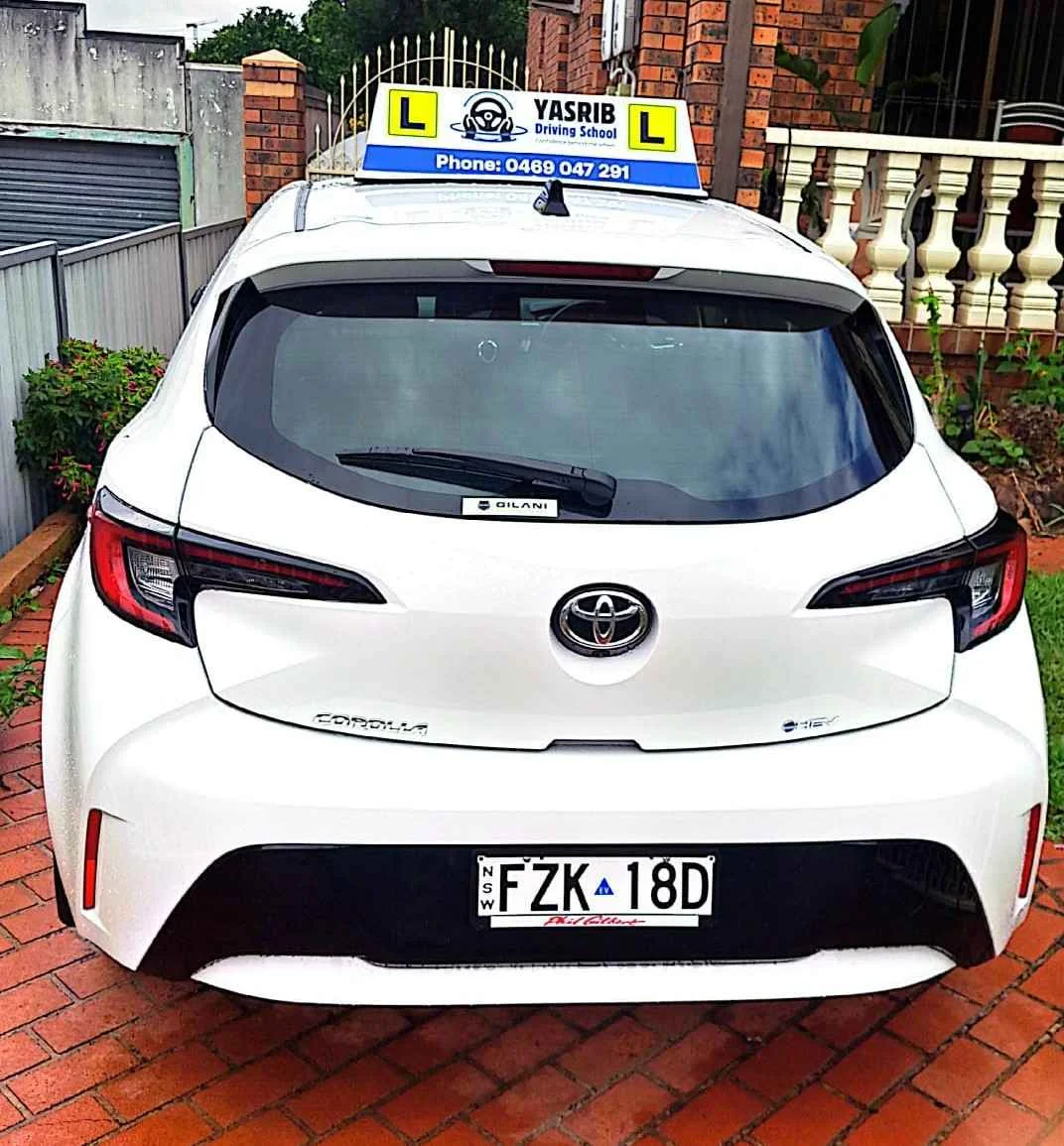
Your choice of vehicle determines whether your exam begins smoothly or gets turned away in the service centre car park. Transport for NSW examiners inspect every vehicle for roadworthiness and safety compliance before entering the passenger seat.
| Evaluation Area | Instructor Dual-Control Vehicle | Private Vehicle |
|---|---|---|
| Mechanical Risk | Maintained to commercial inspection standards | Higher risk of minor undetected faults |
| Examiner Safety | Assessor has direct access to secondary brake | Assessor relies entirely on handbrake console |
| Cabin Setup | Clean, clutter-free, compliant mirrors fitted | Requires manual pre-test clearing and adjustments |
| Warm-Up Integration | Direct progression from warm-up lesson to exam | Requires coordinating parent or supervisor transport |
Testing officers will decline to conduct the test if your private vehicle presents safety hazards. An inoperative high-mount brake light, a cracked windscreen along the driver's sightline, bald tyres below standard tread depth, or a faulty horn results in an immediate test cancellation and forfeited booking fees.
Professional driving instructor cars eliminate these compliance risks. Instructor vehicles feature dual pedals, giving the examiner a secondary braking control during safety-critical moments. Understanding what to expect from a professional driving school can help you prepare for how dual-control cars operate and how testing days are structured. Yasrib Driving School provides 1 hr beginners Lesson, 1.5 hr beginners Lesson, 6 hr beginners Lesson for Beginner drivers, learner drivers needing log book hours, and overseas licence holders converting to an Australian NSW licence in Merrylands, Parramatta, Lidcombe, Blacktown, and surrounding areas.. Booking a warm-up drive right before your test allows you to calibrate your steering, refine your parallel parking, and drive directly into the testing bay with your vehicle ready for inspection.
What NSW Driving Examiners Assess During the Practical Test
NSW driving assessments evaluate your hazard awareness, vehicle control, space management, and strict adherence to road regulations. The testing officer grades your performance across a structured score sheet divided into pre-drive checks, low-speed manoeuvres, and general traffic driving.
The Three Core Parking and Reversing Manoeuvres
Examiners evaluate low-speed vehicle control in suburban side streets. You will be asked to perform at least one of the following standard manoeuvres:
- Kerbside Stop: Pulling over parallel to the kerb, maintaining safe clearance from driveways, securing the car with the parking brake, and safely re-entering the traffic stream using proper mirror checks and blind-spot head checks.
- Reverse Parallel Park: Positioning alongside a parked car, reversing into a kerbside space in a smooth sequence of movements, avoiding mounting the kerb, and finishing parallel within legal distance from the gutter.
- Three-Point Turn: Turning your vehicle around on a narrow street using forward and reverse gears while maintaining continuous 360-degree scanning for approaching vehicles, pedestrians, and obstacles.
Instant Fail Errors Searchers Often Overlook
Candidates can drive smoothly for twenty minutes and still fail instantly due to a single critical error. Examiners record immediate fails for actions that compromise safety or breach road rules:
- Failing to stop completely at a STOP sign: Coming to a rolling stop behind the solid white line is an automatic failure. Your wheels must cease all forward motion completely.
- Speeding: Exceeding the posted speed limit by any margin, including missing a designated school zone operational window, terminates the assessment.
- Inadequate head checks: Relying solely on side mirrors without turning your head to check blind spots before merging, turning, or pulling out from a kerb.
- Intervention by the testing officer: If the examiner must reach for the handbrake, touch the dual brake, grab the steering wheel, or verbally intervene to prevent an incident, the test terminates immediately.
- Mounting the kerb: Scraping or driving your wheels heavily over the kerb during a turn or parking manoeuvre.
How to Prepare in the Final 48 Hours Before Test Day
Preparation during the final two days should focus on route familiarity, vehicle readiness, and mental clarity rather than trying to learn basic driving controls from scratch.
48 Hours Out: Route Refresh and Route Hazards
Spend time driving through the suburbs surrounding your designated testing centre. Pay attention to hidden stop signs behind trees, school zone operational hours, multi-lane roundabouts, and speed zone transitions near railway stations or shopping strips in areas like Parramatta or Merrylands.
24 Hours Out: Document and Vehicle Preparation
Assemble your paperwork into a single folder:
- Current learner licence card.
- Completed, signed physical logbook (if you are not using an approved digital logbook app).
- Secondary photo identification if requested by the service desk.
- Payment confirmation and test appointment slip.
Private vehicles require a thorough pre-test check. Wash the exterior windows, clean out cabin rubbish, top up washer fluid, test all indicator and brake bulbs, and ensure your L plates are clean, undamaged, and securely fixed to the front and back of the vehicle exterior.
Test Morning: Focus and Arrival
Arrive at the Service NSW centre approximately fifteen minutes before your scheduled slot. Parking directly in the designated driving test bays ensures the examiner can walk straight to your car. Take deep breaths to manage your heart rate, and treat the drive as a standard demonstration of everyday safe habits rather than an interrogation. Once the drive concludes, the examiner will return you to the parking bay, complete their scoring tablet, and explain your score sheet before processing your licence upgrade inside.
Frequently Asked Questions
What happens if my test vehicle fails the pre-drive inspection?
Mechanical faults such as blown brake bulbs, cracked windscreen glass in the driver's field of view, or bald tyres lead to an immediate test cancellation. You will forfeit your booking fee and must book practical driving test dates again once your vehicle meets roadworthy standards.
Can I use an overseas driver licence to book practical driving test sessions directly?
Direct online booking is not permitted for overseas licence holders until credentials are verified in person. You must attend a Service NSW branch with your original foreign licence, identity documents, and official translations to open an official applicant file and pass your knowledge test before booking your on-road drive.
How far in advance should I look to book practical driving test slots in Western Sydney?
Metropolitan testing centres across Western Sydney frequently experience high demand that books out several weeks in advance. Securing the earliest open placeholder date and checking the Service NSW portal during morning and mid-afternoon windows helps you secure earlier cancellation slots.
Can my driving instructor sit in the car with me during the practical test?
Official testing regulations permit only the candidate, the testing officer, and occasionally an auditing supervisor inside the vehicle during an assessment drive. Driving instructors cannot ride along, give verbal prompts, or participate in the evaluation during the on-road test.


