
A driving licence is an official legal credential issued by a government authority that grants an individual permission to operate motor vehicles on public roadways. It confirms that a driver has passed specific theory and practical examinations covering road safety, traffic legislation, and vehicle control. Securing a driving licence requires advancing through progressive stages designed to build safe habits behind the wheel.
What Is a Driving Licence and How Does It Work?
At its core, a driving licence serves as state authorization confirming that you understand traffic rules and possess the physical capability to control a vehicle. Operating a motor vehicle on public roads is a regulated privilege rather than an automatic right. Transport departments establish strict standards to ensure every driver meets defined benchmarks for safety, situational awareness, and vehicle handling before driving independently.
Beyond driver authorization, state licences act as a primary form of official photo identification. Issuing authorities require identity verification, residential address validation, and facial biometric capture before manufacturing a physical card or activating an official digital pass. As a result, financial institutions, government agencies, and travel hubs routinely rely on driving cards to confirm age and legal identity.
Modern transport frameworks rely on Graduated Driver Licensing (GDL) systems. Rather than granting full driving privileges immediately after an initial test, GDL systems move candidates through structured developmental tiers. This phased progression allows novice drivers to develop road sense under lower-risk conditions—such as mandatory supervision and zero blood-alcohol restrictions—before driving solo in complex traffic.
Core Legal Responsibilities of Licensed Drivers
Every motorist accepts defined legal obligations when getting behind the wheel:
- Carrying your credential: Drivers must carry their physical licence card or maintain an active, official digital licence on their mobile device whenever operating a vehicle.
- Following licence conditions: Any restrictions printed on your card—such as requiring corrective lenses, driving automatic transmissions only, or using specialized hand controls—are legally binding. Driving contrary to these conditions results in fines and demerit points.
- Notifying authorities of medical changes: Motorists are legally required to report persistent medical conditions, cardiovascular issues, or vision changes that could compromise safe driving.
- Ensuring vehicle safety: The person driving the car shares legal responsibility for its roadworthiness, ensuring the vehicle is registered, properly maintained, and safe for road travel.
What Are the Main Driving Licence Classes?
Driver licensing frameworks categorize motor vehicles according to their weight, axle setup, passenger capacity, and commercial application. Categorizing vehicles ensures operators receive relevant training before handling large commercial trucks or passenger buses.
| Licence Class | Vehicle Types Covered | General Parameters |
|---|---|---|
| Class C (Car) | Sedans, hatchbacks, SUVs, station wagons, utes, and light vans | Standard passenger vehicles, light commercial vans, and small utilities |
| Class R (Rider) | Motorcycles, motor tricycles, and motor scooters | Assessed separately through rider training and power-to-weight stages |
| Class LR (Light Rigid) | Small buses, mini-coaches, and light distribution trucks | Rigid vehicles exceeding standard car mass or carrying larger passenger groups |
| Class MR (Medium Rigid) | Medium commercial freight trucks and urban route buses | Rigid vehicles with two axles designed for medium freight or public transport |
| Class HR (Heavy Rigid) | Heavy freight haulers, three-axle delivery trucks, articulated city buses | Rigid heavy vehicles with three or more axles |
| Class HC / MC (Combinations) | Prime movers with semi-trailers, B-doubles, and road trains | Multi-trailer freight combinations requiring advanced heavy vehicle training |
Passenger Car Licences Versus Commercial Classifications
Most personal motorists operate under a Class C licence. Holding this base car credential permits you to drive standard passenger cars, sport utility vehicles, station wagons, and light commercial vans. It also allows drivers to tow small utility trailers within manufacturer limits.
Transitioning from a standard car category to heavy transport or commercial passenger transport requires separate practical training, knowledge tests, and minimum holding periods on lower classes. Operating rideshare vehicles, limousines, or public buses also requires dedicated passenger transport authorizations alongside the base driver licence.
The Progressive Stages of Getting a Driving Licence
Obtaining a full, unrestricted driver licence follows a sequential path designed to build hazard awareness and technical control step by step.
1. Driver Knowledge Examination
Preparing for the initial learner permit involves studying the official road users handbook and sitting a computerized theory assessment. This test evaluates essential knowledge, including right-of-way rules, traffic lights, speed regulations, safe following distances, and alcohol limits. Passing this theory test grants a Learner permit, permitting you to drive under the direct supervision of an experienced full licence holder or a qualified driving instructor.
2. Supervised Log Book Practice
Structured practice behind the wheel allows learner drivers to gain practical experience across diverse driving environments. Learners must practice across wet weather, high-density traffic, suburban side streets, multi-lane highways, and night conditions. Reviewing what to expect from a professional driving school early during the learner phase helps new drivers establish proper mirror checks, smooth braking technique, and solid lane tracking before bad driving habits form.
3. Practical Driving Examination
Testing day requires candidates to demonstrate safe, independent vehicle operation with an official driving examiner evaluating their driving. The testing officer monitors how well the candidate manages speed, positions the car within traffic lanes, checks blind spots, and performs standard parking manoeuvres without direct intervention.
4. Provisional Licensing Phases
Earning provisional status allows novice motorists to drive solo while continuing to observe specific safety rules:
- Provisional P1 Stage: Drivers operate solo under strict safety restrictions, which include lower overall speed allowances, mandatory zero blood-alcohol limits, bans on mobile phone use, and restrictions on nighttime peer passengers.
- Provisional P2 Stage: After holding a P1 licence for the required duration without suspension, motorists graduate to P2 status. This tier provides higher speed allowances while continuing to enforce defensive driving restrictions and zero alcohol tolerance.
Completing both provisional stages allows drivers to upgrade to a full, unrestricted driving licence subject to general road legislation.
Managing Learner Log Books and Practice Hours
Log books track practical experience during the learner stage. Licensing agencies require learner drivers under specific age thresholds to log a designated number of supervised driving hours, including mandatory nighttime driving, before booking a road assessment. Each log book entry must accurately document the date, start time, end time, route taken, vehicle registration, and supervising driver details.
Many licensing systems grant extra log book credits for professional instruction. Under these schemes, an hour of structured professional instruction counts for multiple log book hours up to a set cap, encouraging learners to master defensive driving fundamentals alongside private practice.
Practical Test Evaluation Criteria
Evaluators use structured marking guides to grade applicant competence during the driving assessment. Reviewing official performance benchmarks helps drivers prepare methodically before discovering how to book practical driving test dates at their local service centre.
Key assessment areas include:
- Speed control: Maintaining an appropriate speed suited to current road and traffic conditions while staying strictly within legal limits.
- Lane positioning: Centring the vehicle accurately within lane boundaries and keeping safe buffers from parked cars or kerbs.
- Intersection gap selection: Choosing safe, decisive gaps in moving traffic without causing oncoming motorists to brake or swerve.
- Low-speed vehicle manoeuvres: Performing reverse parallel parking, three-point turns, or kerbside stops with steady clutch or throttle control and thorough all-around visual checks.
How Overseas Licence Conversion Works for New Residents
Transferring an international driver authorization to a local state credential depends on residency status, applicant age, the origin country of the existing licence, and verified driving history.
Temporary Visitors Versus Permanent Residents
Temporary visitors staying on work visas, tourist entries, or study programs can generally drive using their current overseas licence, provided it remains valid and is accompanied by an approved English translation or an International Driving Permit.
Permanent residents and settled citizens face different legal rules. Once permanent residency is granted or a person resides in the area beyond statutory grace periods, they must convert their overseas credential to a locally issued driver licence to remain road-legal. After a local licence is issued, driving on the overseas credential is no longer permitted in that jurisdiction.
Recognised Jurisdictions Versus Non-Recognised Origins
Road authorities divide overseas jurisdictions into distinct categories based on local testing standards:
- Recognised Countries: Motorists holding full licences from nations with comparable driver testing frameworks can often convert directly. This process generally requires proving identity, establishing local residency, confirming driving history, and passing an eyesight test without sitting practical or theory tests.
- Non-Recognised Countries: Drivers whose original licences were issued in jurisdictions outside the recognized list must sit a theory knowledge test and pass a practical driving exam before receiving their local licence. Depending on verified prior driving tenure, successful applicants are issued either a provisional or full licence.
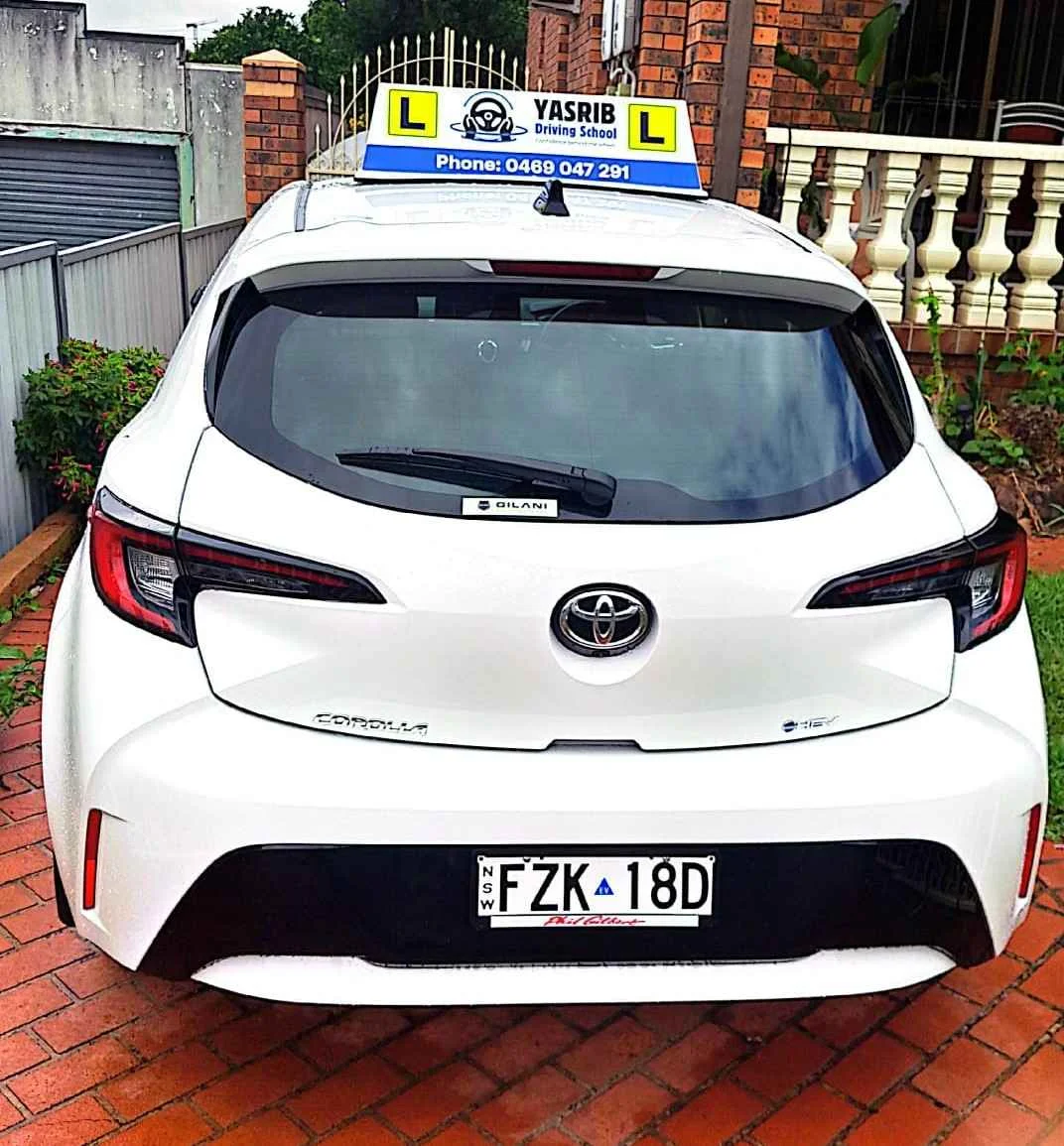
Yasrib Driving School provides 1 hr beginners Lesson, 1.5 hr beginners Lesson, 6 hr beginners Lesson for Beginner drivers, learner drivers needing log book hours, and overseas licence holders converting to an Australian NSW licence in Merrylands, Parramatta, Lidcombe, Blacktown, and surrounding areas.
Required Documentation for Conversion
Applying for a conversion in person requires presenting original administrative documents to the transport registry:
- Proof of legal identity: A valid passport, national identity card, or citizenship paperwork.
- Proof of residential address: Recent utility invoices, residential tenancy agreements, or bank statements.
- Current foreign licence: The physical, unexpired driver card issued by your home country.
- Official English translation: A formal translation from an approved translation authority or consulate if the original licence card is not written in English.
- Eyesight test: A quick visual acuity check conducted at the registry customer service counter.
Common Adjustments for Overseas Drivers
Experienced international motorists often run into unexpected difficulties when taking local practical tests. Driving habits developed in other countries frequently conflict with local assessment standards.
Frequent challenge areas include:
- Keeping to the left: Adapting mirror checks, lane tracking, and spatial awareness when switching to left-side traffic flow.
- Roundabout navigation: Managing multi-lane roundabouts, selecting correct entry lanes early, indicating properly upon entry and exit, and giving way to circulating traffic from the right.
- Mandatory blind spot checks: Looking only into side mirrors is a common test failure point. Drivers must turn their heads to check blind spots over their shoulders before turning, merging, or moving out from a parked position.
- School zone speed limits: Slowing down to active school zone limits requires diligent speed management. Building solid habits for driving safe for life helps experienced international drivers pass their assessments smoothly.
Critical Mistakes That Cause Learners to Fail the Driving Assessment
Practical driving assessments enforce strict performance guidelines. Minor operational errors might only result in small deductions, but critical safety errors cause an immediate test failure.
1. Neglecting Blind Spot Head Checks
Shoulder checks represent the single most common reason test applicants fail. Side mirrors have physical blind zones that easily conceal motorbikes, bicycles, or merging cars. Examiners check that drivers physically turn their heads over the shoulder:
- Before moving away from a parked position at the kerb.
- Before changing lanes or diverging across lane markings.
- When turning across dedicated cycle lanes or bus corridors.
- Before reversing out of driveways or parking bays.
2. Exceeding Posted Speed Limits
Speed compliance requires constant vigilance, especially when entering temporary roadworks or active school zones. Travelling even slightly over the posted speed limit results in an instant test termination. Drivers must actively scan for speed signs and maintain safe buffer zones below maximum limits.
3. Unsafe Gap Selection
Gap selection at busy intersections requires accurate judgment of approaching vehicle speeds. If an examiner determines that turning across oncoming traffic caused another motorist to brake, slow down abruptly, or alter their steering path, the test is recorded as an immediate fail.
4. Rolling Through Stop Signs
Stop sign rules require a complete cessation of vehicle motion behind the solid white stop line. Rolling past a Stop sign at low speed—even when cross traffic is completely clear—is an automatic testing failure. The wheels of the vehicle must come to a complete standstill before easing forward to check sightlines.
5. Presenting an Unroadworthy Vehicle
Vehicle condition inspections take place before the road test begins. An examiner will cancel the appointment immediately if the candidate's vehicle shows any of the following defects:
- Tyres with worn, bald tread or sidewall damage.
- Non-working brake lights, indicators, or headlight globes.
- Windscreen cracks that obscure the driver's forward view.
- Damaged, frayed, or jammed seatbelts.
- Active dashboard warning indicators, such as illuminated brake or airbag fault lights.
Frequently Asked Questions
Can I drive legally while waiting for my physical driving licence card to arrive?
Yes, driver licensing bodies issue an official paper interim receipt or provide a verified digital licence update on your official state mobile application immediately after you pass the test or renew. This interim authorization serves as valid legal proof to drive while your plastic card is produced and delivered by mail.
What happens if an overseas driving licence is not printed in English?
Driving credentials not written in English cannot be used alone on local roads. Motorists must carry an official International Driving Permit alongside their original card, or obtain a formal written translation issued by an approved government-recognized translator or consulate.
How long is a full driving licence valid before needing renewal?
Standard passenger car licences generally remain valid for periods between one and ten years, depending on the renewal term selected and paid for. In most cases, full licence renewals do not require re-sitting driving tests unless you are adding a heavier vehicle class, returning from a suspension, or reaching senior age thresholds where medical reviews become mandatory.
What is the difference between Class A and Class B licences compared to car licences?
While commercial freight classifications like Class A or Class B apply to heavy commercial transport vehicles in certain overseas jurisdictions, standard domestic motoring across Australia uses Class C for passenger cars. Upgrading to heavier rigid or articulated transport classes requires holding a base car licence for a minimum period before sitting specialized heavy vehicle assessments.


